









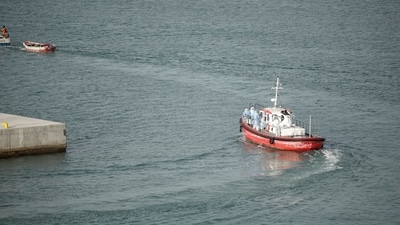
The World Health Organization (WHO) on Wednesday said eight cases linked to the hantavirus outbreak aboard the MV Hondius cruise ship have now been identified, including three laboratory-confirmed infections, as global health authorities race to trace contacts and contain further spread of the rare Andes strain of the virus. The outbreak has already claimed three lives, while at least four others have fallen ill after the ship sailed from Argentina and later reached waters off West Africa.

In a post on X, the WHO said Swiss authorities had confirmed a hantavirus case in a passenger from the cruise ship after the individual responded to a health alert sent by the vessel’s operator and sought treatment at a hospital in Zurich.
The agency said the passenger is currently receiving medical care in Switzerland and that international contact tracing efforts are underway in coordination with relevant countries under the International Health Regulations (IHR).
WHO confirmed that the virus involved in the outbreak is the Andes strain of hantavirus, a rare form capable of limited person-to-person transmission. The strain was identified by the National Institute for Communicable Diseases in South Africa and Geneva University Hospitals in Switzerland.
The WHO also acknowledged assistance from the Institut Pasteur de Dakar in Senegal and Argentina’s Administración Nacional de Laboratorios e Institutos de Salud in investigating and responding to the outbreak.
South African health authorities earlier confirmed that two passengers removed from the ship had tested positive for the Andes strain. One of them, a British man, remains in intensive care at a South African hospital.
The second confirmed case, a Dutch woman, died in South Africa and was diagnosed posthumously after laboratory testing.
According to health officials, hantaviruses are primarily spread through contact with rodents, rodent urine, saliva or droppings. However, the Andes strain — most commonly found in Argentina and Chile — is unusual because it can also spread between humans through close and prolonged contact.
Experts say such transmission remains relatively rare and is generally associated with situations involving close exposure, such as sharing food or sleeping arrangements with an infected person.
The MV Hondius cruise ship is currently off the coast of Cape Verde in West Africa. At least three infected passengers are still on board, though evacuation plans are reportedly being arranged.
WHO said two of the earliest cases linked to the outbreak — the Dutch woman who died and her husband — had travelled through Argentina and other parts of South America before boarding the vessel.
The UN health agency said it would continue working with affected countries to ensure passengers, crew members and close contacts receive information, monitoring and medical support to prevent further spread of the virus.